BioRevolution #4 - Organoid Intelligence
While we are talking about Artificial Intelligence (AI), Organoid Intelligence (OI) is coming with its revolutionary style. This groundbreaking domain seeks to transcend the limitations of traditional computing by harnessing the intricate workings of the human brain. Moreover, it does that by using our cells. Please, sit in your chair and fasten your seat belts because you will read issue is stunning. Imagine, scientists are using your own cells and making your brain organoid. What will we do for a living? Maybe, we will learn to become more human. Anyway, that continues in the future perspective part of the issue.
We will examine OI from 3 main perspectives;
- Scientific Perspective
- Market Perspective
- Future Perspective
Let’s start with a scientific perspective!
Scientific Perspective
Before diving into the realm of intelligent organoids, it’s essential to understand what organoids are. Grown from stem cells, these 3D structures can replicate the complexity of actual human organs. Used in research for disease modeling and drug testing, organoids represent a significant advancement in biomedical science. But what if these organoids could do more? What if they could ‘think’ or ‘learn’?
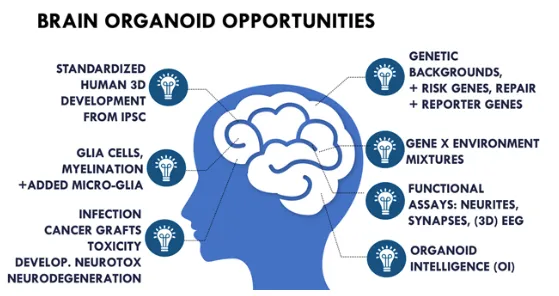
The essence of OI revolves around creating biocomputers that surpass the efficiency, power, and speed of existing silicon-based and AI systems. By harnessing 3D cultures of human brain cells—brain organoids—and integrating them with advanced brain-machine interfaces, OI aims to replicate and leverage the brain’s natural processing capabilities. This initiative not only promises to advance computing technologies but also provides deeper insights into brain development, learning processes, and memory formation.
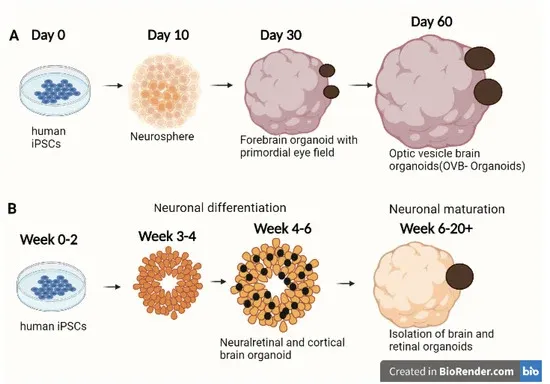
Brain organoids, also known as neural organoids, are artificially grown in vitro tissues that closely resemble the human brain. These organoids are created by culturing pluripotent stem cells, which spontaneously develop into three-dimensional structures mimicking brain tissue. Over months, these organoids can develop anatomical features resembling specific regions of the nervous system, such as the cortex, choroid plexus, retina, meninges, spinal cord, and hippocampus. This makes them invaluable for studying neurodevelopmental and neurodegenerative diseases in a controlled environment. […]
The OI system’s architecture is meticulously designed to optimize the organoid’s learning potential. This is achieved by enriching the culture environment with cells and genes critical for learning processes, including Immediate Early Genes (IEGs). The organoid’s scalability, viability, and long-term sustainability are supported by integrated microfluidic systems, allowing for precise control over the organoid’s development and maintenance.
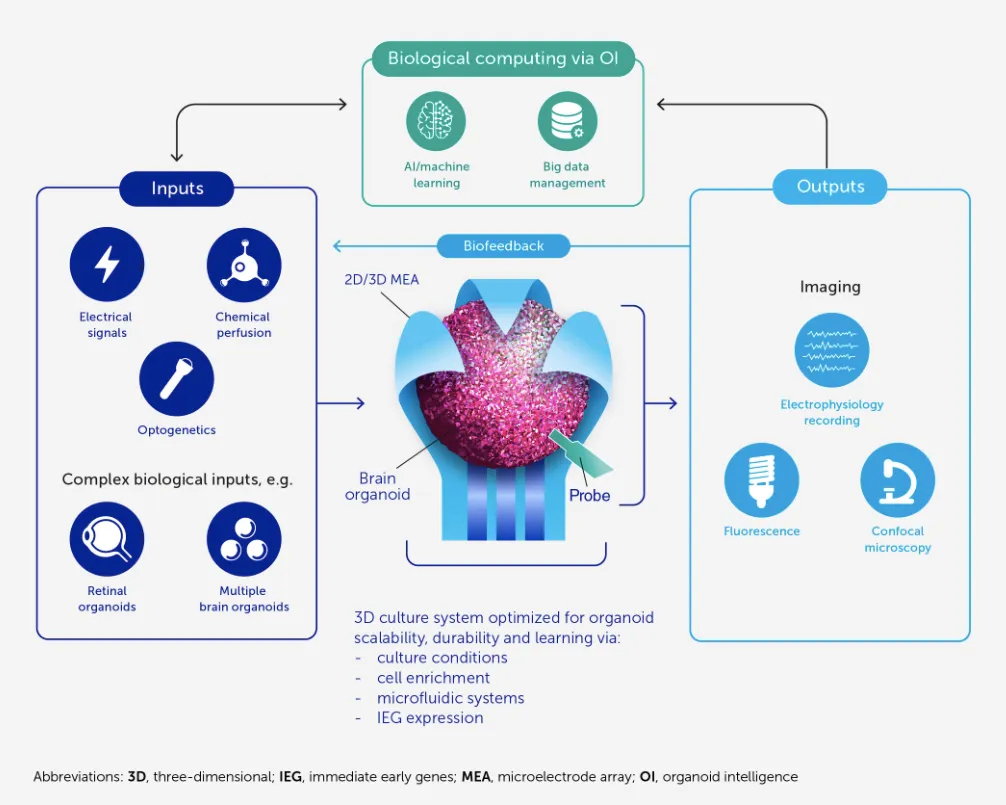
Inputs to the organoid are varied, including electrical and chemical stimuli, synthetic signals from machine sensors, and natural signals from connected sensory organoids, such as those mimicking retinal functions. Outputs from the organoid are equally diverse, captured through advanced electrophysiological recordings and imaging techniques. These outputs not only serve computational purposes but also act as biofeedback, promoting the organoid’s learning and adaptation.
Artificial intelligence and machine learning are integral to the OI framework. They encode and decode signals interacting with the organoid, developing solutions that seamlessly blend biological and computational elements. This synergy is supported by a robust big-data management system, crucial for handling the extensive data generated by this biocomputing setup.
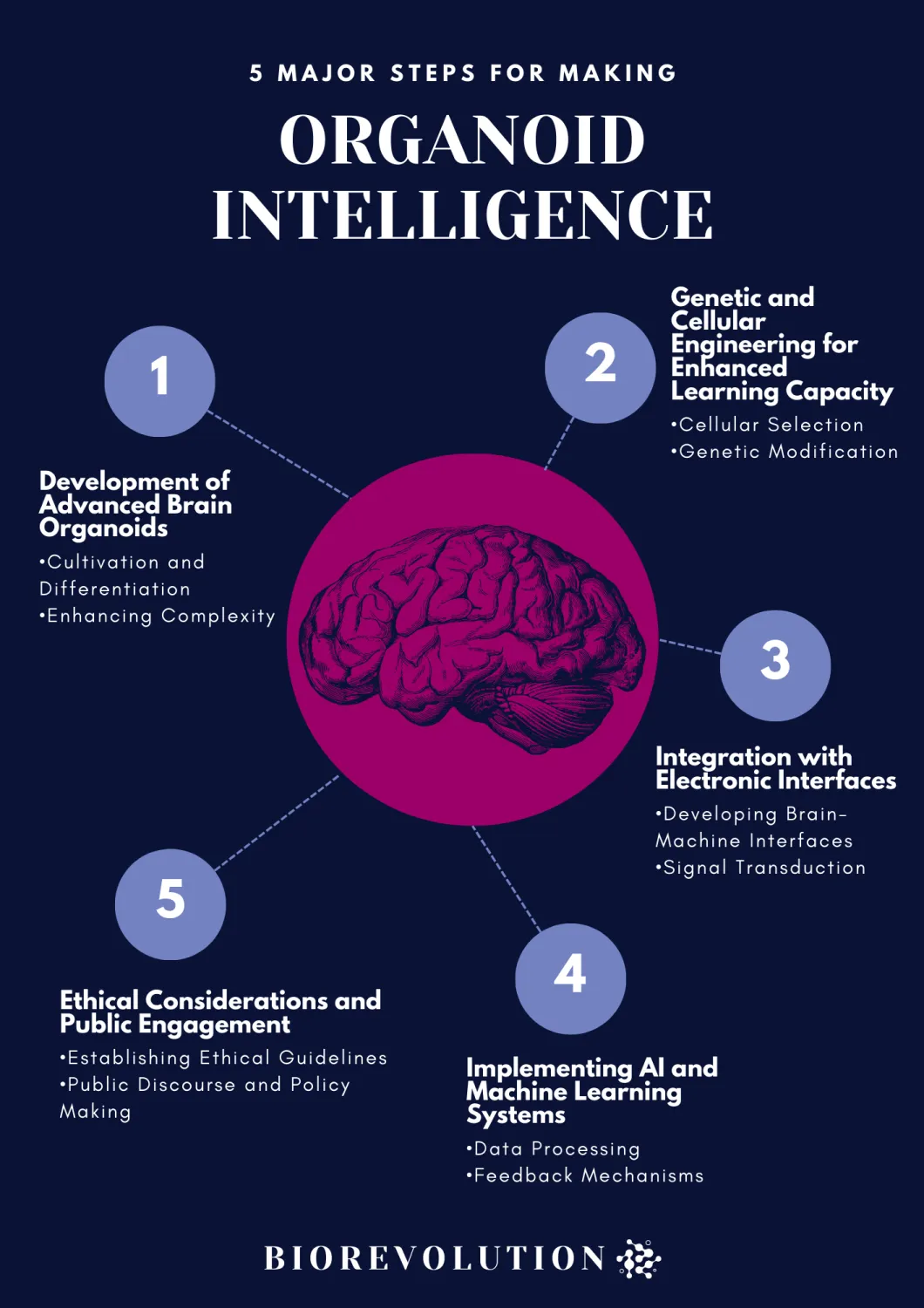
OI’s ambition is not merely to create more efficient computing systems but to forge a future where biocomputers enhance computational efficiency and provide groundbreaking insights into neurological conditions like dementia. This journey stands at the innovation crossroads, not just heralding the creation of new technology but envisioning a future that harmoniously blends the marvels of the human brain with the limitless possibilities of artificial intelligence.
The theoretical advantages of OI over traditional AI are significant, especially in rapidly changing environments, when data is scarce, in low-power, low-cost settings, for unique problems without precedent, and when swift solutions are essential. This suggests that OI could not only complement existing AI technologies but, in some cases, offer superior alternatives. […]
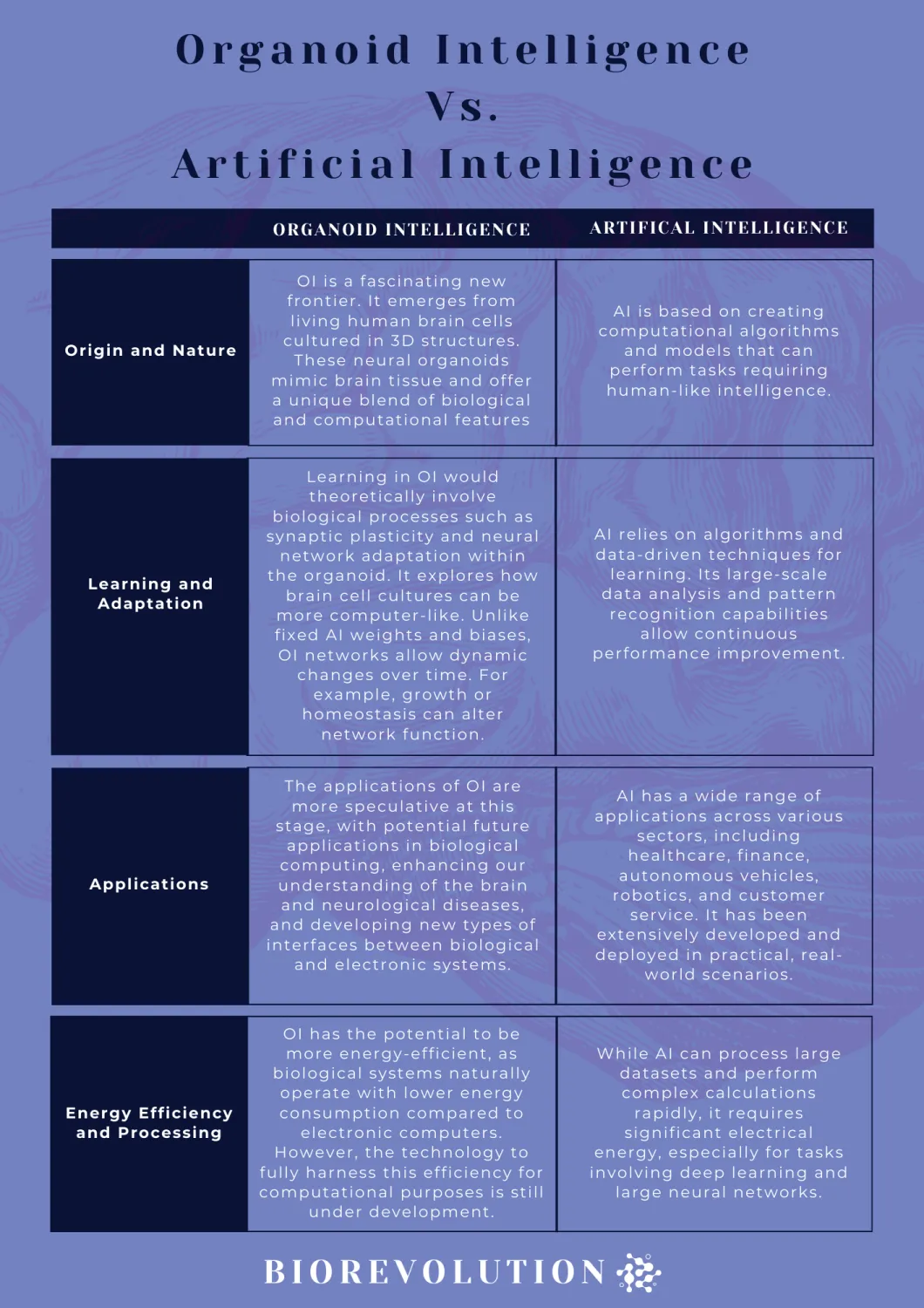
As we stand on the brink of this new frontier, it’s clear that OI represents more than an advancement in biotechnology or computing; it symbolizes a profound shift in how we perceive and harness the interplay between life and machine, offering a glimpse into a future where biological and digital intelligences converge.
🚨Groundbreaking News: Human Brain Cells in a Dish Learn to Play Pong […]
Researchers taught brain cells grown in a petri dish to play the classic video game Pong! Here’s how it happened:
DishBrain: The team cultivated around 800,000 living brain cells in a controlled environment. These neurons formed a simplified model of brain function, known as DishBrain.
Structured Feedback: They provided structured feedback to these neurons, akin to teaching a novice player how to play Pong. Instead of silicon-based computer models, they worked directly with real biological neurons.
Learning to Play: Remarkably, after just five minutes of this feedback, the neurons learned to control a virtual paddle in the Pong game. They responded to an electrical signal, moving the paddle up and down to intercept the bouncing ball.
Market Perspective
We examined the scientific details of Organoid Intelligence (OI) together. Time to look at the organoids market details!
The global human organoids market was valued at USD 1.18 billion in 2025. It is expected to grow from USD 1.44 billion in 2026 to USD 5.71 billion by 2034, a CAGR of 18.8%. North America led the market with a 41.52% share in 2025. Regulation is also pushing the field forward.
-Fortune Business Insights, Human Organoids Market Report 2026-2034-
Startup Ecosystem
Organoid intelligence and organoid-based startups are growing especially in Switzerland, Australia and the US, and Singapore is becoming a hub for biological computing infrastructure. Here are some examples:
A Switzerland based startup, founded in 2014, is building “bioprocessors” from human brain organoids. Its organoids sit on microelectrode arrays, so researchers can stimulate the neurons electrically or with neurotransmitters such as dopamine, glutamate and serotonin, and record how the network responds. In 2024 it launched the first online platform that gives researchers around-the-clock remote access to 16 human brain organoids. The company says these bioprocessors use a million times less power than digital processors. Universities can subscribe for $500 per month per user. The company is now raising funds to reach its next goal, learning inside the dish.
A Melbourne based startup, founded in 2019, became famous when its neurons learned to play Pong. It grows human neurons from stem cells directly on a silicon chip, and the chip sends and receives electrical signals so the neurons get feedback and adapt their activity. In March 2025 it launched what it calls the world’s first commercial biological computer, which combines neurons from human stem cells with silicon. It has raised $11 million from investors including Horizons Ventures, Blackbird Ventures and In-Q-Tel. Each unit costs around $35,000. It has also opened a cloud platform for users worldwide and released a public API for programming biological neural networks. Its next step is a biological data center in Singapore, planned to house up to 1,000 units deployed in phases.
If you are interested in organoid intelligence and would like to learn more about the startups mentioned here, or discover other promising teams in this space, feel free to reach out to me. I’d be happy to share more details and help you find the right connections.
The information in this Market section was last updated in September 2026. Market figures, funding amounts and company details may have changed after this date.
Future Perspective
- As someone who chose the role of 3D bioprinters in drug discovery as the subject of the BSc graduation project, I would first like to state that I enjoyed writing about this subject. As you can guess, my future perspective is that these organoids are bioprinted with 3D bioprinters. I look forward to a movement from start to finish in this regard, from companies producing consumables to laboratories. We are taking the first steps toward a unique future where we can experience personalization even on our computers, which I will discuss in more detail under the topic of personalized treatment. We should experience the unique pleasure of witnessing this and think a lot.
- If my laptop and even my biocomputer created from my brain cells will facilitate or do the work I need to do, what will I do for a living? When I think about this issue, I don’t feel afraid because I can say “I will be more human” as an answer to this question. More human connection, more kindness, more laughter. Please, do not think of me as a writer who is passionate about technology and looks at the world through rose-colored glasses. We are creatures that develop the features we think about more in ourselves, which is why someone needs to look at the beneficial aspects of technology.
- From an ethical perspective, when talking even about artificial intelligence, we cannot figure out who would be responsible for a mistake made by it. Now we are talking about organoid intelligence. This is going to be much more complicated because of the big question that who we should go to when these biocomputer systems make a mistake. Is the person responsible the user, the developer of the system, or the person whose cells were used to create the organoid? Now, referring to the previous article, I would like to say that “maybe it is time to be much more human and raise more people?”. We need more philosophers to bring these ethical problems closer to a solution, more communicators to bridge the gap between the public and the scientific community, and good people to use or produce all these developments correctly.
Thank you
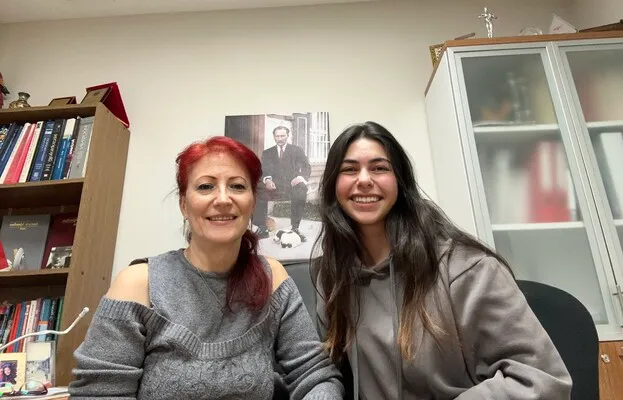
I would like to introduce you to Prof. Dr Gülruh Albayrak. I took her stem cell course and she contributed greatly to the development of our future perspective by showing Organoid intelligence as one of the sub-topics of the course. I thank her very much.
Kind regards,
Elif Damla Karakolcu
See you beyond Organoid Intelligence :)
📰 SUBSCRIBE TO MY LINKEDIN NEWSLETTER
If you liked this newsletter article, I hope you’ll consider being a regular subscriber. 🙏
Just scroll up to the very top and click that SUBSCRIBE button.
Originally published on LinkedIn.