BioRevolution #12 - Astrobiology
Biotech Beyond the Earth…
There are certain questions that don’t cross our minds during our daily routines, but in the stillness of the night, we may find ourselves thinking about them. These questions, which are fleeting for us and quickly fade when we get distracted, are the very topics that scientists meticulously study. This is why biotechnology is ever-present in our lives—sometimes in the quiet of the night, and sometimes amid the hustle and bustle of the day. One of the most common questions that comes to mind is whether life exists on other planets. How close we are to answering this question remains unknown. Perhaps, on a distant planet with more advanced technology than ours, an intelligent life form is also trying to discover life beyond their own existence, possibly standing closer to the answer than we are.
From another perspective, how we define life as humans might shape how we interpret future discoveries. If, as individuals, our expectation of life is to find a form similar to ourselves, then it’s a sign that we need to reconsider our approach before diving into research. Looking at the issue from its core, while Earth and our lives are carbon-based, we could one day encounter a planet and life form that are based on astatine, a chemical element that naturally exists on Earth in trace amounts (I mention astatine as an extreme example; this is not based on any scientific research). What such a planet and life form might resemble is another question altogether.
When I started university, I participated in a competition with a group of friends by writing a project proposal to send a recombinant tardigrade to Mars. After passing the first three stages, we were eliminated when we were informed that our proposal did not align with current scientific standards. Based on my thoughts and the inspiration behind BioRevolution, anyone who works on today’s project today is already late; the key is to begin today on the project of the future. It turns out that my first-year self had already embraced this philosophy :)
Now, let’s dive into our issue with a scientific perspective!
Scientific Perspective
Astrobiology is an interdisciplinary field that seeks to understand the origin, evolution, distribution, and future of life in the universe. It merges knowledge from diverse scientific domains such as astronomy, biology, geology, chemistry, and planetary science. By investigating the processes that allowed life to emerge on Earth, astrobiologists aim to uncover the principles that govern the existence of life throughout the cosmos. This requires examining extreme lifeforms on our planet, understanding the chemical composition of the universe, and probing environments on planets and moons that may be habitable, like Mars or Jupiter’s moon Europa.
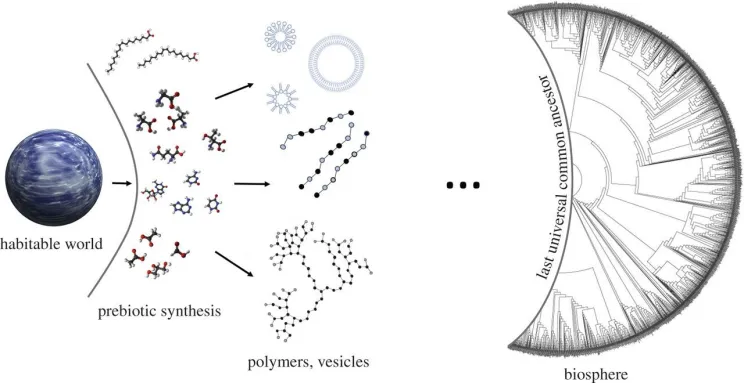
One of the central focuses of astrobiology is abiogenesis, the study of how life originated from inanimate materials. While we do not yet have all the answers, significant questions have been raised about the conditions necessary for life to form, such as how organic compounds, water, and minerals come together to create living organisms capable of replication. These inquiries stretch beyond Earth, as scientists explore whether similar processes could happen in other planetary environments. Additionally, astrobiology looks at how water and essential elements arrive on planets and moons and how they interact with these celestial bodies.
Another critical pursuit in astrobiology is the search for life beyond Earth. While no concrete evidence of extraterrestrial life has yet been found, the logic supporting its potential existence has become increasingly plausible. Mars, for example, may have once had conditions conducive to life, being warmer and wetter in its ancient past. By studying planetary systems and exploring extreme environments where life can thrive on Earth, astrobiologists are assembling a scientific foundation that could one day lead to the discovery of life elsewhere in the universe, be it microbial or something more complex.
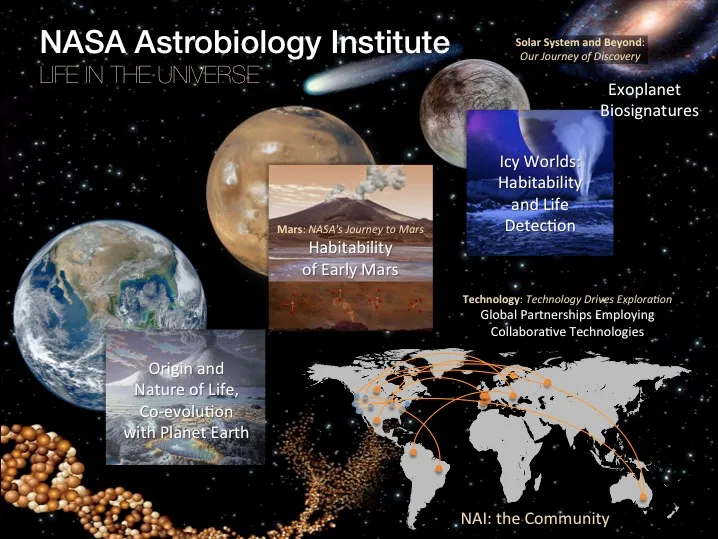
Astrobiology also grapples with humanity’s future in space and the future of life on Earth. Given the existential threats posed by climate change, pollution, and the destruction of ecosystems, astrobiology not only studies life elsewhere but also seeks to understand what is necessary to sustain life here and beyond. This requires an understanding of planetary habitability and the long-term prospects for life in various cosmic environments. As astrobiology evolves, it continues to probe deep questions about our place in the universe, fostering a scientific exploration that has the potential to reshape our understanding of life itself.
Market Perspective
Astrobiology itself is mostly driven by space agencies and academic research, but the knowledge it creates about how life behaves beyond Earth is now turning into a real industry: space biotechnology. The space-based biopharmaceuticals market grew from USD 4.29 billion in 2024 to USD 4.80 billion in 2025, and is expected to reach USD 7.46 billion by 2029, growing at a CAGR of 11.7%. The main drivers are the expansion of the commercial space industry, increasing investment in space research and growing demand for personalized medicine. Timing also matters: the International Space Station is set to end operations by the end of 2030, so researchers and companies that rely on microgravity will need new, commercial platforms to run experiments and bring results back to Earth.
-The Business Research Company, Space-Based Biopharmaceuticals Global Market Report 2025-
Startup Ecosystem
Space biotech startups are growing in the US, Europe and Japan. Here are some examples:
A California based startup, founded in 2020, builds small orbital laboratories that make medicines in space. In microgravity, the active ingredients in medicines crystallize differently than on Earth, which can create new drug formulations that are impossible to produce on the ground. Its capsules process these materials in orbit, independently of the International Space Station, and then return to Earth at speeds reaching Mach 25. Since its first mission in 2023, it has completed several successful launch and return missions. In July 2025 it raised a USD 187 million Series C, bringing its total funding to USD 329 million, and opened a new lab to work on crystallizing complex biologics such as monoclonal antibodies.
A Sendai based startup, founded in 2021, builds small satellites that run experiments and manufacturing in orbit, then bring the results back to Earth in recovery capsules. Its platform works independently of crewed space stations, which makes it a strong candidate for the post-ISS era. It partners with Axiom Space and Redwire to combine its reentry and recovery services with biopharmaceutical technologies. In June 2026, it closed a ¥6.4 billion (about USD 40 million) Series B, bringing its total funding to ¥10.1 billion.
A German startup, founded in 2019 with offices in Meckenbeuren and Luxembourg, is one of Europe’s leading space biotech companies. It builds fully automated mini-labs, some the size of a wallet, including bioreactors and incubators for cell cultures, protein crystals and plants. Microgravity is especially valuable here because human tissue grows in three dimensions in space, which can improve drug discovery. It has completed more than 25 research missions to the ISS, with partners including NASA, ESA, GSK, Charité Berlin and MIT. It also sells and rents ground-based machines that simulate microgravity in regular labs, so researchers can test their ideas on Earth before going to space.
If you are interested in space biotechnology and would like to learn more about the startups mentioned here, or simply exchange ideas about this field, feel free to reach out to me. I’d be happy to share more details and help you find the right connections.
The information in this Market section was last updated in September 2026. Market figures, funding amounts and company details may have changed after this date.
💫 Video Suggestion
What We Know (& Don’t Know) About Searching for Alien Life with Dr. Adam Frank by NASA - National Aeronautics and Space Administration Astrobiology
Expert Perspective
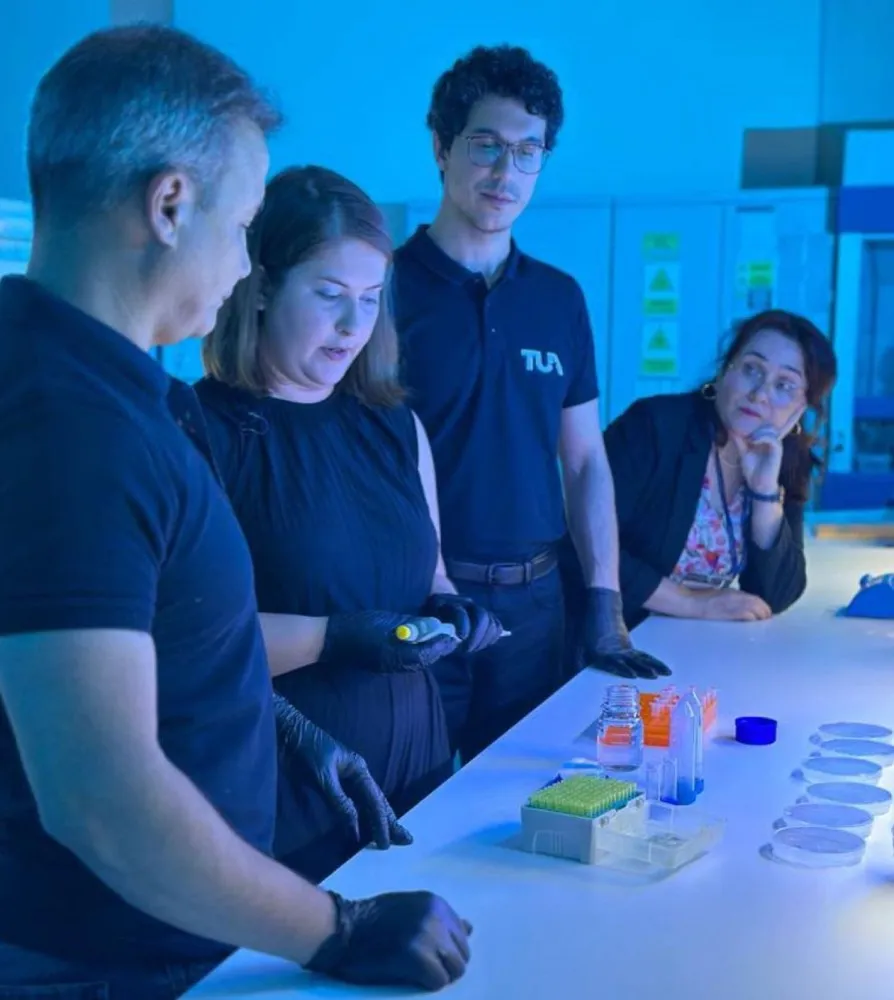
I asked two questions to Tugce Celayir . The CRISPR-GEM project is one of 13 scientific projects conducted by Turkish astronaut Alper Gezeravcı during Türkiye’s first manned space mission. The project, developed by Tuğçe Celayir over five years, aims to advance plant-space biology by applying CRISPR technology in microgravity. In 2022, Celayir adapted and submitted her project individually in response to the Turkish Astronaut and Science Mission call and continued her work at Yıldız Technical University with the support of Prof. Dr. Tamer Yılmaz . As the youngest principal investigator among the project leaders, Celayir’s study tests the efficiency of CRISPR technology and the Agrobacterium-mediated infiltration technique on Arabidopsis plants in space conditions. Currently, in the post-flight phase, the final results will be published in a scientific paper.
-There were two reasons why I personally directed my questions to Tuğçe Celayir: first, she is the youngest principal investigator among the projects sent from Türkiye, and second, she provided us with direct mentorship while we were working on our project that I mentioned in the introduction.-
Q1- How do you observe the impact of advancements in astrobiology on the biotechnology sector?
Tugce Celayir : We see that today’s technology has been shaped by the know-how gained from past space studies and the successful technology transfer processes of space agencies like NASA. Space technologies have been an inducer for the development of technologies on Earth in all fields. This is essentially a two-way feedback relationship. As technology on Earth advances, it takes space research to the next level, and what we learn from space allows us to further develop technology on Earth. If we focus on space biology, we see that with the development of biotechnology, more complex life sciences research can be conducted in space missions, and space studies continue to provide answers to critical questions we try to address in biology and biotechnology. The extreme environments offered by space missions give us new perspectives as we try to explore and understand the complexity and limits of life. Looking at its practical effects, with the commercialization of space and the rise of private sector ventures, it would not be wrong to say that space biotechnology-focused organizations will also have a place. Future space missions must advance with a multidisciplinary approach, and biotechnology will be one of the most impactful and important fields in this regard.
Q2- Could you share your future perspective on the field of astrobiology? What kind of biotechnological revolutions are we expecting in this area?
Tugce Celayir : The fundamental questions we ask in the field of astrobiology are diversifying with new subtopics, and we are beginning to ask more specific questions. Space research, deep space observations, and radio astronomy studies bring new discoveries and new questions every day. Astrobiology will advance in conjunction with astronomy in this context. Research conducted within the context of space biology and “taking human life into space on the path to becoming a multi-planetary species” is diversifying through space stations, orbital flights, and even simulations. Future space missions will be shaped by the commercialization of space, potential new space stations, and long-term exploration and research goals. In this regard, supported by advances in biotechnology, I foresee genetic engineering playing a significant role in humanity’s journey into space.
Elif Damla Karakolcu: Many thanks to Tuğçe for answering my questions and agreeing to be with me in this issue.
5 Fundamental Questions of Astrobiology
- How does life originate from non-living matter, and what processes led to life on Earth?
- How do water and essential organic compounds reach planets and moons, and how do they influence the development of life?
- Does life exist elsewhere in the universe, particularly on planets and moons with extreme conditions?
- Could life exist based on elements or systems other than carbon and DNA, and might such lifeforms exist undetected on Earth?
- What are the conditions needed to sustain life on Earth and in extraterrestrial environments, and how can we protect life from emerging existential threats?
📰 SUBSCRIBE TO MY LINKEDIN NEWSLETTER
If you liked this newsletter article, I hope you’ll consider being a regular subscriber. 🙏
Just scroll up to the very top and click that SUBSCRIBE button.
Originally published on LinkedIn.