BioRevolution #1 - Gene Editing

Detect it, remove it, fix it! When encountering a problem or bug, we adhere to these systematic procedures. Living organisms’ genomes are truly remarkable. Terms like “Genetic replication” and “Genetic modification” are casually spoken, but it’s crucial to recognize that the reality is far from simple. Numerous enzymes and materials are often employed for a single step in these processes. It’s important to grasp this fundamental notion. Now, let’s delve into the inaugural theme of BioRevolution: Gene Editing.
We will examine gene editing from 3 main perspectives;
- Scientific Perspective
- Market Perspective
- Future Perspective
Scientific Perspective
Gene editing is a technique that enables scientists to modify the DNA of various organisms, including plants, bacteria, and animals. Genome editing tools, acting akin to molecular scissors, precisely cut DNA at specific locations. Subsequently, scientists can either remove, add, or replace DNA at the targeted site, allowing for intentional genetic modifications.
There are several genome editing techniques available, including ZFNs, TALENs, CRISPR-Cas9, base and prime editing, and PASTE. Each of these techniques has its own advantages and disadvantages, and scientists choose the technique that is best suited for their research needs. […]
CRISPR-Cas9 revolutionized gene editing. In 2020, The Nobel Prize in Chemistry was awarded to Emmanuelle Charpentier and Jennifer Doudna for their discovery of the CRISPR/Cas9 genetic scissors. This tool allows scientists to edit the DNA of any living thing with extremely high precision. The CRISPR/Cas9 system is a genome editing technology that acts like scissors, cutting the DNA at a specific spot. Then scientists can remove, add, or replace the DNA where it was cut. […]
This technology has revolutionized the molecular life sciences, brought new opportunities for plant breeding, and is contributing to innovative cancer therapies and more.
🚨Groundbreaking News: UK first to approve CRISPR treatment for diseases: CASGEVY™ will treat the blood conditions sickle-cell disease and β-thalassaemia.
This is the first regulatory authorization of a CRISPR-based gene-editing therapy in the world! […]
Market Perspective
We examined the science of gene editing and CRISPR together. Now it’s time to look at the market!
The gene editing market was valued at $10.31 billion in 2025 and is expected to reach USD 12.28 billion in 2026, which means an annual growth rate (CAGR) of 19%. By 2030, it is projected to reach USD 24.45 billion at a CAGR of 18.8%. Yesterday is yesterday. Let’s look further into the future!
By 2035, the genome editing market is expected to reach USD 52.56 billion, growing at a CAGR of 16.95%. CRISPR is still the star of the show. CRISPR/Cas9 accounted for more than 44% of revenue in 2025. North America held 48% of the market, and Asia Pacific is expected to be the fastest-growing region.
-Research and Markets, Gene Editing Market Report 2026 / Towards Healthcare, Genome Editing Market 2026-2035-
Startup Ecosystem
Gene editing startups are growing fastest in the US (especially Boston and the San Francisco Bay Area), in Western Europe (France and the UK), and more and more in China. Here are some examples:
A Cambridge, Massachusetts based company, founded in 2017, specializes in base editing. This technology changes single DNA letters without cutting the DNA double strand. It started as a unicorn startup and is now publicly listed. It had a market cap of $2.97 billion as of August 2026, up 88% in one year. After strong Phase 1/2 data in alpha-1 antitrypsin deficiency, the company plans a global pivotal cohort in the second half of 2026, aiming for accelerated FDA approval.
A California based startup, founded in 2017 as a university spin-out, builds ultra-compact CRISPR systems for both therapeutics and diagnostics. It has raised $271 million across 7 rounds and reached a $1 billion valuation. In 2024 it signed a collaboration with a major US pharma company. Under that deal it received $100 million, including a $95 million equity investment, and is eligible for up to $370 million per target in milestone payments. It has also partnered with M42 and the Abu Dhabi Department of Health on drug development.
A Paris based startup, founded in 2014, focuses on in vivo gene editing of the microbiome. It edits the bacteria living in our bodies so they produce therapeutic molecules exactly where they are needed. It has raised $52.3 million over 7 rounds, with investors including Khosla Ventures, Seventure Partners and Sanofi Ventures. In 2025 it expanded its Series B to $35 million and secured a $5 million grant from the French government.
A UK based startup, founded in 2019 in Cheshire, develops a non-CRISPR gene editing platform. Its modular system is small, flexible and can edit without causing a DNA break or nick. It has raised a total of £7.51 million across seed rounds.
A Shanghai based startup, founded in 2021, has become one of the most talked-about names in the field. It raised $70 million in a Series C in May 2026, bringing its total funding to more than $156 million, and is preparing for a potential Hong Kong IPO. It has brought six CRISPR-based therapies into clinical development. One of its base editing programs was the first in vivo base editing therapy to receive IND clearance in both China and the United States.
If you are interested in gene editing and would like to learn more about the startups mentioned here, or discover other promising teams in this space, feel free to reach out to me. I’d be happy to share more details and help you find the right connections.
The information in this Market section was last updated in September 2026. Market figures, funding amounts and company details may have changed after this date.
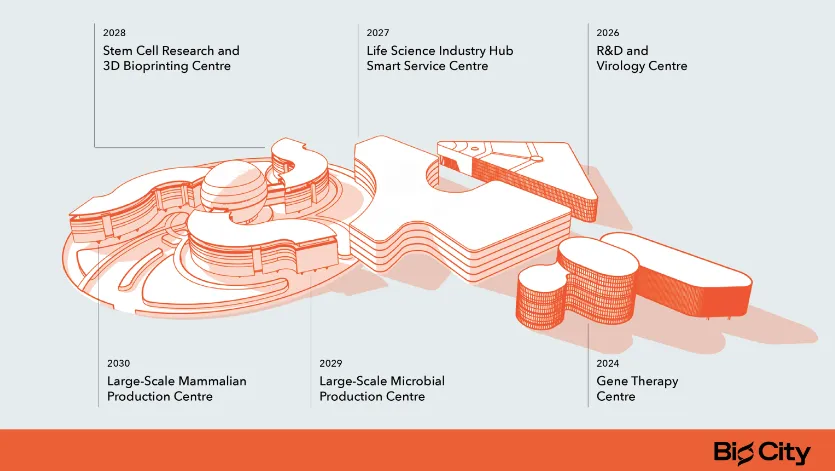
🚨Groundbreaking News: BIO CITY which is the largest biotech city in Europe will soon be built in Lithuania Vilnius, with an investment amounting to €7B. Gene Therapy Centre will open in 2024. By 2030, BIO CITY will see the inauguration of five additional complexes, including centers for R&D and Virology, Life Sciences Industry Smart Services, Stem Cell Research, and 3D Bioprinting, as well as two large-scale production centers for mammalian and microbial products. […]
Future Perspective
- There is a point that everyone clearly sees: the potential of genetic editing in the treatment of diseases, as evident from the strides being made in this direction. Now, I want to shift your perspective and focus on a specific point: Equality. It is undeniable that these technologies come at a cost. Initially, it is expected that a small affluent segment will benefit from these treatments. However, hindering the accessibility of those who can reach it for the sake of equality would lead to another injustice. What we need to consider is how these products can become more accessible. Inviting scientists and investors interested in this issue to contribute to this future perspective and taking proactive steps to support these issues before they become a global concern is foresight.
- While the emphasis above and in the sources is on treatment methods, agriculture, and food play a significant role here. Looking at the perspectives of both the productivity we gain from the harvest and the efficiency we derive from the consumed product, genetic editing stands at an incredible point. We are discussing a topic that can have a positive impact on the world in terms of hunger and inequality. Although even in Turkey alone, with over 3000 endemic plant species, the number of plant species we humans use as food is limited. Can the obstacles to using endemic species as food be removed through genetic editing methods? I don’t know, but I believe it’s worth thinking.
We will be together again in two weeks with our new topic, Circular Bioeconomy.
See you beyond gene editing :)
📰 SUBSCRIBE TO MY LINKEDIN NEWSLETTER
If you liked this newsletter article, I hope you’ll consider being a regular subscriber. 🙏
Just scroll up to the very top and click that SUBSCRIBE button.
Originally published on LinkedIn.